




Why EPC assessors need to keep pace with modern electric heating.

Energy Performance Certificates (EPCs) play an increasingly important role in property sales, lettings and refurbishment decisions. As technology evolves, so too should the recommendations that underpin them.
As the SAP methodology has evolved, so too has electric heating technology. However, some assessors still record or recommend storage heaters as a single category, overlooking the significant differences between older storage heaters and modern high heat retention (HHR) models that are recognised within SAP.
Getting this distinction right can have a measurable impact on an EPC assessment. While the exact outcome will vary depending on the property, replacing direct-acting electric radiators with modern high heat retention (HHR) storage heaters can typically improve a property’s SAP score by around 8–20 points. Upgrading from older, non-HHR storage heaters to qualifying HHR models can often deliver a further 5–10 point improvement.
Conversely, if a property fitted with HHR storage heaters is incorrectly recorded as having generic or older storage heaters, the EPC rating could be reduced by several SAP points. In some cases, that difference may be enough to move a property from a C to a D, or from a D to an E, potentially affecting property value, mortgage options, rental compliance and the homeowner’s investment decisions.
This is why accurately identifying and recording the type of electric heating installed is just as important as recognising improvements to insulation, glazing or lighting.
The Electrorad Thermastore HHR for an example, is recognised on the BRE SAP Product Characteristics Database (PCDB), it combines a high heat retention core with adaptive charging technology, optional app control, open-window detection and a direct-acting boost element. It can operate on Economy 7 tariffs while automatically learning how much energy to store based on anticipated demand, helping to avoid unnecessary electricity consumption.
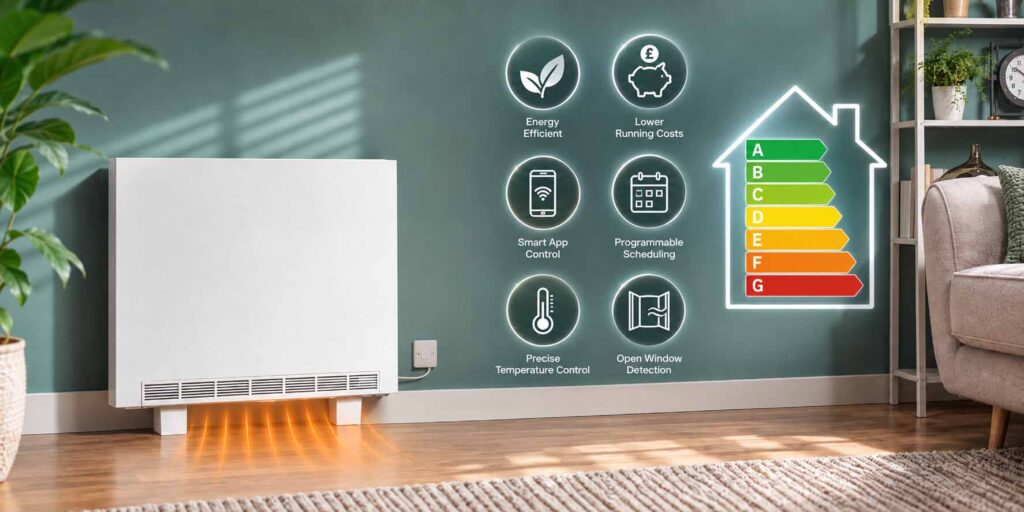
For assessors, this matters because the heating system recommended can have a significant influence on an EPC rating. Simply suggesting “new storage heaters” without considering the latest HHR products could mean overlooking technologies specifically designed to improve energy performance and reduce running costs. Products listed on the SAP database are recognised within the assessment methodology, making it important to specify the correct type of heater rather than relying on outdated assumptions.
The pace of innovation in electric heating has accelerated dramatically over the last decade. Features such as occupancy sensing, smart controls, geolocation, adaptive charging, voice integration and remote management are now becoming commonplace. These advancements give homeowners far greater control over their energy use while helping to improve comfort and reduce waste.
As regulations tighten and the UK continues its transition towards lower-carbon homes, keeping up to date with new heating technologies is no longer optional – it’s essential. Taking the time to understand the latest generation of SAP-listed heating products ensures assessors can provide recommendations that reflect today’s technology, rather than yesterdays.
Ultimately, better-informed recommendations don’t just improve EPC assessments – they help homeowners make smarter investment decisions and achieve better long-term energy performance.
Want to learn more? Electrorad can provide technical guidance and product information to help with EPC and SAP assessments. Or simply Get in Touch to hear about the latest developments in high heat retention storage heating.
Request A Quote Today